Building Envelope Project Update
Current Updates
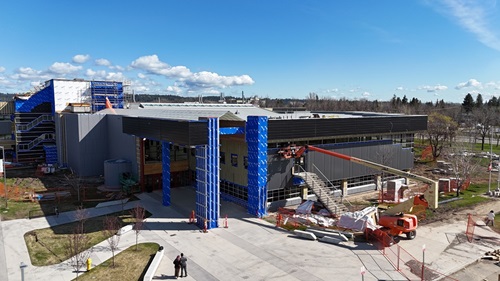
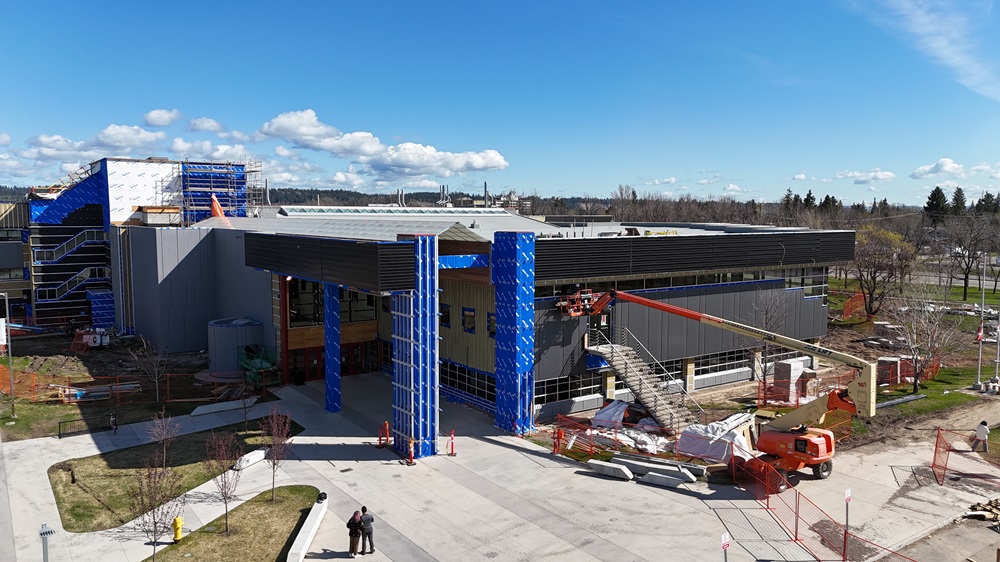
Building envelope work continues across the Prince George Campus, including skylight replacement, exterior panels and siding, concrete work, soffit framing and exterior lighting installation.
Work is taking place in the 200, 300, 400, 500 and 700 Blocks, the main courtyard and surrounding exterior areas.
Skylight removal and replacement continues at the 700 Block, with noisy work taking place after hours. Other activities include concrete grinding at the 300 Block North stairs, sidewalk replacement near the 500 Block west entrance, and exterior finishing and lighting installation.
Check the full map to see how campus blocks are connected and where work is taking place.
Expected Impacts
🔊 Noise: Concrete grinding at the 300 Block North stairs, sidewalk replacement at the 500 Block, and exterior trim and panel installation may cause increased noise. Skylight demolition and installation will also be noisy, with work taking place after hours.
🚧 Access: Guardrail installation at the 300 Block North second-floor stairs on Thursday, November 19 will partially restrict access, with a brief closure of approximately five minutes during grinding and welding. Work may also affect the second-floor exit after hours. Sidewalk replacement near the 500 Block west entrance will require pedestrians to walk around the work area, but the entrance will remain open.
🌱 Landscaping: Landscaping continues in the main courtyard.
👷 Construction Activity: Skylight replacement, black metal siding, exterior trim and panels, stair finishing, soffit framing, exterior lighting and concrete work will continue through November and into December.
Please allow extra time when travelling through campus and follow posted signage and detours.
Upcoming Activities
November 16–22
200 Block
- Continue installing black metal siding and soffits on the second and third floors.
300 Block North
Grind concrete and prepare the top stair landing 🔊
Install finishing materials on the stair landing.
Install radiator supports.
Continue installing exterior trim and finished panels 🔊
Thursday, November 19: Install guardrails at the second-floor stairs. Access will be partially restricted, with a brief closure of approximately five minutes during grinding and welding 🔊
Second-floor exit access may be affected after hours.
300 Block South
- Complete window sealing and caulking.
400 Block
Continue framing exterior soffits for perimeter lighting.
Begin exterior perimeter lighting work.
500 Block
Cut and replace a section of concrete sidewalk near the west entrance 🔊
Pedestrians will need to walk around the work area. The entrance will remain open.
700 Block
Continue skylight removal and replacement 🔊
Noisy skylight work takes place after hours.
Main Courtyard
- Continue landscaping 🌱
November 23–29
200 Block
- Continue installing black metal siding and soffits on the second and third floors.
300 Block North
Continue installing exterior trim and finished panels 🔊
Continue installing radiator supports.
400 Block
Continue soffit framing for perimeter lighting.
Continue exterior perimeter lighting installation.
500 Block
- Install exterior trim and finished panels 🔊
700 Block
Continue skylight removal and replacement after hours 🔊
Continue exterior concrete work near the East Entrance.
November 30–December 6
200 Block
- Continue black metal siding and soffit installation.
300 Block North
- Continue exterior trim and finished panel installation 🔊
400 Block
Continue soffit framing for perimeter lighting.
Begin removal work near the 400 Block west entrance.
700 Block
- Continue skylight removal and replacement after hours 🔊
December 7–13
300 Block North
- Continue exterior trim and finished panel installation 🔊
400 Block
- Continue removal work near the west entrance.
700 Block
- Continue skylight removal and replacement after hours 🔊
About the Project
The Building Envelope Project is designed to enhance the exterior of the Prince George Campus through energy-efficient upgrades, improved sustainability, and long-term infrastructure renewal. These improvements will help create a more comfortable and resilient campus for students, employees, and visitors.
This project is made possible with restricted capital funding by the Ministry of Infrastructure.
The Building Envelope Project supports CNC’s Strategic Plan (lhulh whuts’odutel’eh – Learning Together) under Priority 3.5: Rejuvenate College Infrastructure. Specifically, it supports objectives 3.5.1 through 3.5.4 by upgrading campus infrastructure, revitalizing learning spaces, improving sustainability, and helping reduce the college’s overall carbon footprint.
Key Highlights of the Project:
- Energy-efficient building upgrades
- Modernized campus exterior
- Improved long-term durability and sustainability
Project Timeline
- March 2025: Project mobilization and site preparation
- May 2025: Construction begins
- Summer–Fall 2025: Demolition and exterior renewal work
- Winter 2025–26: Interior and exterior finishing activities
- Spring 2026: Major exterior upgrades continue across campus
- Estimated Completion: May 2027
Impact on Campus
- We are committed to minimizing disruptions during construction. Updates will be provided regarding:
- Campus accessibility
- Temporary disruptions and detours
- Changes to parking, entrances, and pedestrian routes
- Our team is focused on ensuring that the impact on your daily experience is as minimal as possible.
Building Envelope Project FAQ
Why does some of the new siding look wavy?
Some members of the campus community may notice slight waviness or “ripples” in portions of the new metal siding. This effect, known as oil canning, is a common characteristic of flat metal siding and is widely recognized across the construction industry.
Oil canning is a visual effect only. It does not affect the strength, safety, durability, or weather protection of the building. The project team continues to monitor installation quality to ensure the work meets project requirements and industry standards.
The effect is often more noticeable in certain lighting and typically becomes less noticeable over time.
Read more about siding appearance
Questions?
Contact CNC
Contact CNCMore News